


Customer Testimonial Videos
Real Customers Talk About Their Experiences Using MusicCord
MusicCord Has Made My Job Easier...
Morningstar Studios owner, recording engineer Glenn Barratt tells about recording quality improvements afforded by MusicCord-PRO ES and The Essence Reference-II power cords.
I Was Wrong...
They Definitely Work!
Renowned recording/mix engineer Dave Pensado was “intensely curious and equally skeptical" about power cords. After his audition Dave stated "these are tools to not just make things sound better but be better."
Greater Image Width, Depth, & Lower Noise
Recording engineer Nate Scott emphasizes the importance of MusicCord’s superior grounding and shielded cable construction to achieve the quietest noise floor and best quality recordings.
Using MusicCord With A Pedal Board...
"John Marks Express" bassist Aalics Bronson shares his experience using MusicCord-PRO power cord with his pedal board and bass amp, then hooked them to fellow bassist Doug Wimbish's rig.
Master Clock, Interface, Monitors
Using MusicCord with digital master clock and Analog-Digital Interface improved soundstage imaging and transients; improved frequency response of studio monitors.
"Bigger Sound" & Quiet Background
Bassist Andrew Gouche explains how using MusicCord-PRO power cord with his amp or studio gear gives him "bigger sound" - expanded soundstage dimensions and lower noise.

Eliminating Noises In Church PA Systems
Specialists recommended an expensive "system overhaul” to address noise and fidelity issues. We addressed these problems for a fraction of the cost of an overhaul by replacing "stock" power cords with MusicCord.

Band Mates Note Difference
Uncle Lewie, bassist with the band "East River Drive" talks about using MusicCord with his bass amp. Uncle Lewie switched the cord without telling his pro or church band mates. They heard the difference!
More Endorsements










A lot of attention has been given lately to high-quality guitar cables but I haven't come across another product like this one, which upgrades the quality of the ac power cord to a huge, noticeable degree. I'm getting one for my amp as well; I can't see using a cheap power cable any more. It's kind of like using the molded-end guitar cable that comes with a beginner guitar - why bother?"
It's a way to improve my sound that I never would have thought of, but I'm glad I tried one. Live or in the studio, it just works."
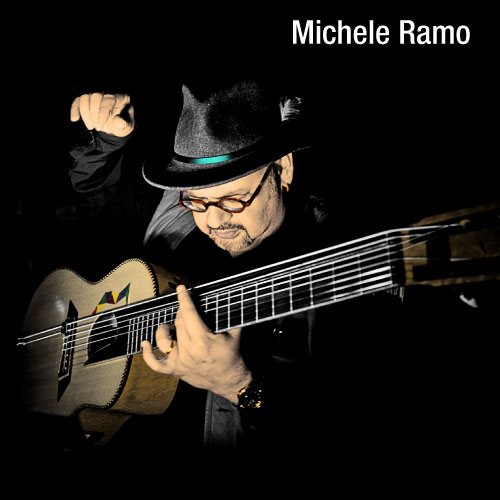
I had no idea how the MusicCord-PRO was going to change my sound. The superior quality is more than amazing - from the highs to the low D of the fretless basses...same goes for my violin!...So fantastic that it is difficult to find words."

I often play solo, and the improved clarity, definition and presence that MusicCord gives me is terrific. I will be spreading the word about Essential Sound Products."
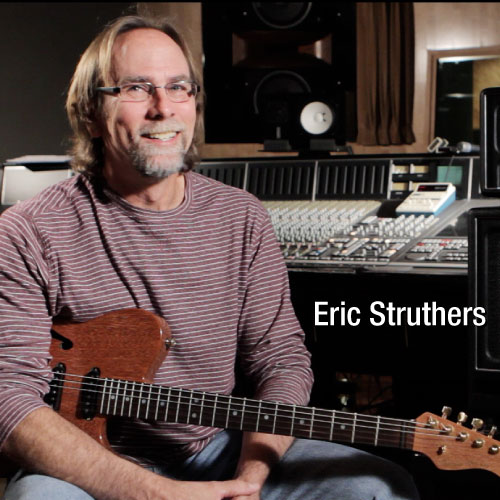
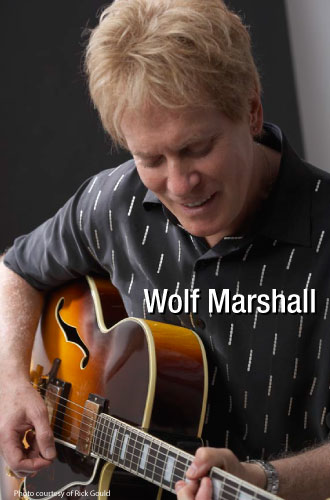
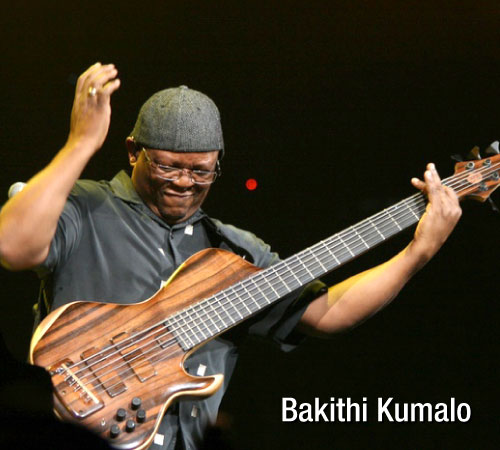
It allows me to play with a clear and focused sound!"
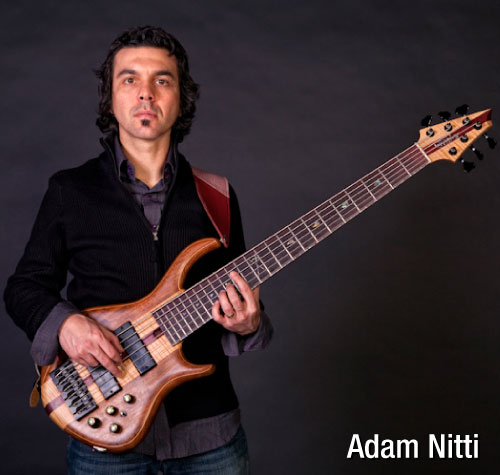
Hearing is believing!"
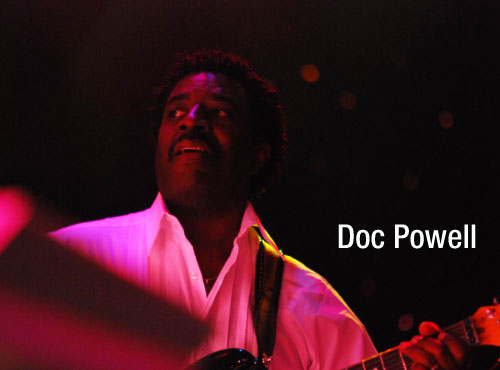
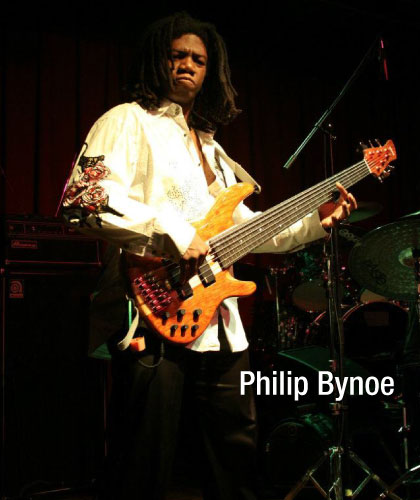
I think in the near future these power cords will be everywhere great music is made."









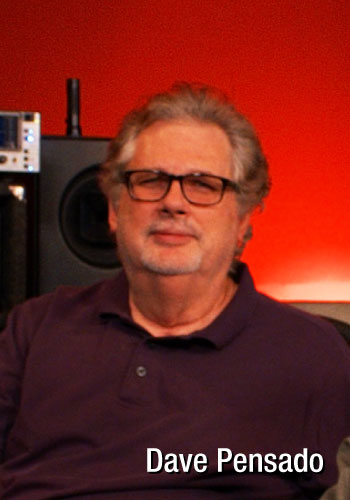
Host of Pensado's Place and Into The Lair
"I was expecting to have to squint, close my eyes, sit in the sweet spot, but Erik Reichers the owner of The Echo Bar this amazing place I'm working right now...he's off to the side behind the camera and he heard it easily. I was thinking guys, a little bit of improvement is worth it. Any advantage you gain is worth it. But that was significant."
"I don't want to oversell them or overhype the cables but they really made a difference, not just from a physics perspective but from a musical perspective."
Prince, Pit Bull, Ludacris, Rick Ross, T.I., Rachelle Ferrell, Yo Gotti, Nelly
When it comes to sound, Kenny is dead serious. When KennyMixx chose power cabling for his new state-of-the-art mastering studio at "Patchwerk" in Atlanta, he chose MusicCord. Period!
"When the artists hear their music in the clubs, they say the sound is "bigger". The spatial qualities I'm able to achieve are better than ever! And, the bass is off the chain - extended and tight!"
Past President, Audio Engineering Society
Professor, Clive Davis Department of Recorded Music
Tisch School of the Arts, New York University
Fortunately, a friend in the music industry blindly gave me a MusicCord-PRO cable with the instruction: "plug it in to your power amplifier, try it out and let me know what you think." That evening I exchanged the MusicCord-PRO for the regular IEC power cable, not knowing what to expect. Immediately, I heard my audio system being given a new lease on life. Suddenly and dramatically, the imaging was solid, the transients were sweeter, the bass was tighter and, overall, the general impression, now, was a feeling of greater musicality. All of this improvement came from simply changing out the power cable! Unbelievable! I found myself listening to music in my home for hours at a stretch; something that I hadn't done in my home for a long, long time. The MusicCord-PRO has made all the difference. Now, that's what friends are for!
If the MusicCord-PRO could make such a dramatic improvement to my home system, what change in performance could I expect if I were to use them with my studio monitors? I've had my head buried in one pair of monitors for twenty-five years and I feel that I have a good idea of what they sound like. Upon switching out the typical IEC power cable for the MusicCord-PRO, the kick now had 'bounce,' the bass had 'thump,' and the brass had a silkiness that I knew was in my recording, but I could never fully appreciate. I feel that my clients and I are now hearing more of the detail that's been coming in the microphones for all these years.
I'm solidly convinced that MusicCord is the new standard power cord to make your recordings sound the way you intended."
In dense mixes where it's hard to hear the articulation vocals are more distinct and fuller.
MusicCord-PRO helps me be more productive and work faster."
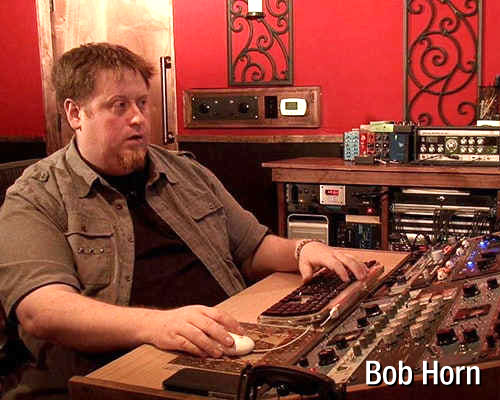
Beto Cuevas, Usher, Nelly, Ne-Yo, Macy Gray, Akon, Levert, Aaron Carter, Brian Culbertson, Eric Marienthal, Dave Koz, Lupe Fiasco
The first mix I did came out great! It's easier to hear things and I'm actually monitoring quieter!
I think I'll buy more in the near future to keep with the guitar amps and tube mic power supplies, etc."
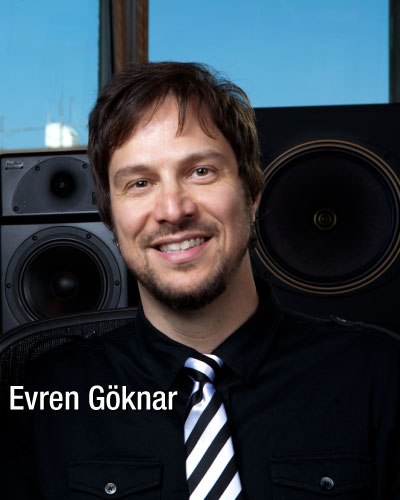
"The Voice", Lenny Kravitz, Iggy Pop, Heart, George Clinton, N.W.A., Queensrÿche, Megadeth, KISS, The Smashing Pumpkins, Mariah Carey
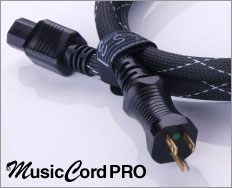
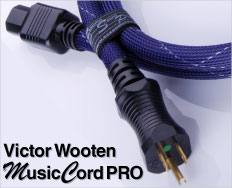
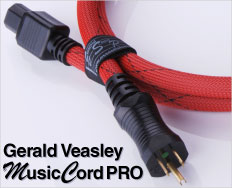
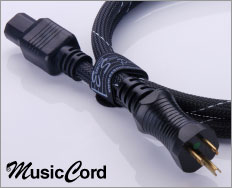
The first thing you will notice about MusicCord power cables is the quality of the product. They come with a zippered case, and exhibit substantial heft upon examination. The ends are molded so as not to pull apart or loosen over time. The cable is sheathed in a durable mesh-like fabric that is aesthetically pleasing as well.
Performance-wise they remain impressive to listen to. With MusicCord, I notice an improvement in the performance of my professional audio equipment including: compressors, equalizers, power amplifiers, A/D and D/A converters or analog tape machines. For instance, I have spent a lot of time with a pair of Pro ES cords on my Manley 350 tube mono block amplifiers, and they clarify transients, tighten up the low frequency information, and generally allow the power amplifiers to more effortlessly access current needs based on the dynamics of the music, which translates into better audio fidelity. I also have spent time with the cords on my AD/DA converters, usually a Prism ADA-8XR, or the Lavry Gold series. I notice increased clarity and depth in the image of the program material I play back and/or record. The cables especially shine with equipment that runs at higher internal voltages, utilizing vacuum tubes, and/or transformers in the signal paths of their circuit designs.
I would recommend MusicCord Power Cables for any audiophile or critical listening/music production application."
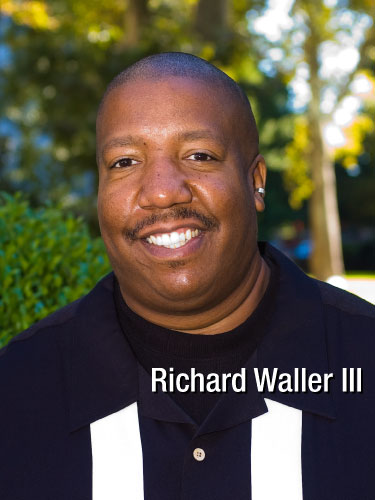
John Legend, The Roots, Grover Washington Jr., Gerald Veasley
"They're great at reducing harshness, particularly in the midrange. I can clearly hear transient detail and the tightened low end. The cords make it much easier to place sounds in their own space within a dense mix. They have become an essential part of my work. I even carry a few with me to other studios and mastering sessions."
"I must admit, before discovering these cables I thought all high-end ac cords were "snake oil". But these cords are the real deal."
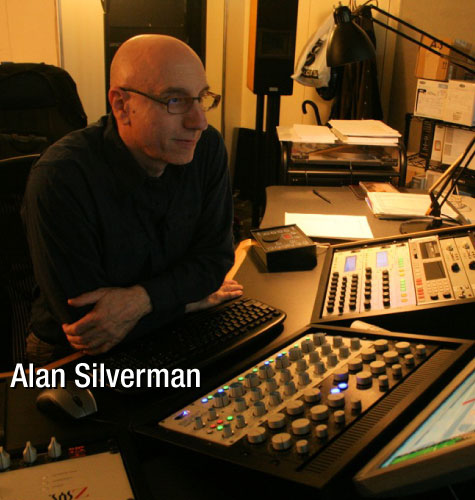
Arf! Mastering
To check my sanity, I loaned a MusicCord-PRO to a fellow mastering engineer to try at his facility, and to a mixing engineer client to try on his audiophile Mark Levinson system at home. I asked each to install the cord and let me know if they heard anything, being careful not preface either request with my own opinion. Both engineers reported back with exactly the same impressions and enthusiasm I had experienced.
I don't have the EE knowledge to know why this product works so well, but it's a permanent part of my rig now and my system has never sounded better."
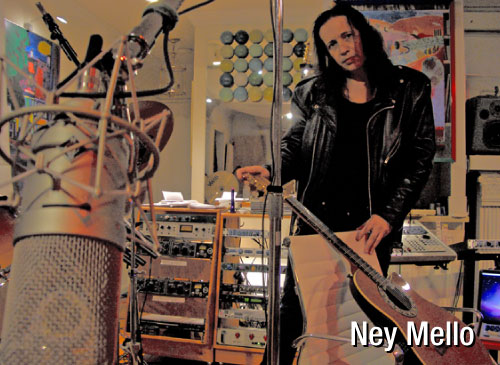
Owner, Electric Love Studios
I noticed that it becomes quite obvious when I switch digital clocks for example. The smearing and harshness of inferior clocks get exposed very clearly.
I also noticed the elimination of audible RF interference in guitar amps when tracking after midnight when RF gets more intense. Guitar amp tones become round and smooth. No more slight grain in transistor amp tone. My subwoofer had been sounding earth shattering with dance club depth, but very smooth.
Even 16-bit recordings sound remarkably clear when digital tracking gear, analog vintage mic pre's and compressors are plugged via MusicCord-PRO power cables. The sound of the monitors project more like in live situations in terms of perceived attack and immediacy."
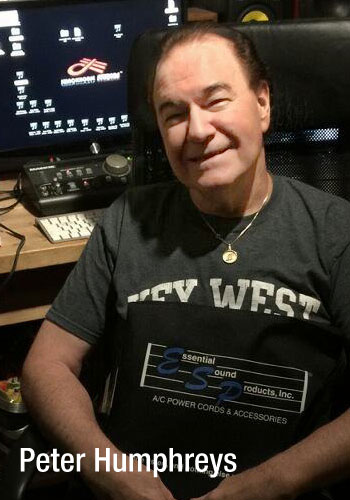
Teddy Pendergrass, Lou Rawls, Phyllis Hyman, Billy Paul, Grover Washington Jr.
The improvements made me feel like the equipment was “breathing” allowing it to give the detail it was designed to do. Without it, there was a difference that fell short.This cable will allow your gear to work to its full potential.
I suggest that if you try this cable you’re going to hear a difference. I have no question about that. The question you’ll have is can you really do without the cable after you’ve tried it. That’s the challenge."
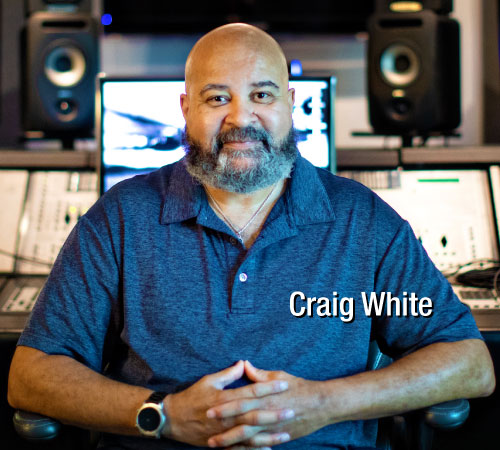
"The amount of previously hidden detail that they reveal is amazing!"
"Let your ears be the judge!"


